Respiratory
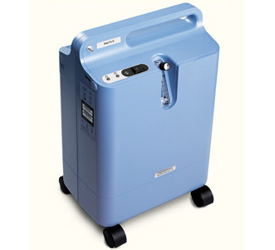
Stationary Oxygen Concentrators

|
Oxygen concentrators for home oxygen therapy are available as either stationary or portable units. Stationary models are generally larger and heavier than their portable counterparts; however with increased size comes an increased oxygen flow rating. Stationary oxygen concentrators are capable of delivering anywhere from 0.1 to 10 liters per minute of oxygen while most portable models deliver 3 or less. Stationary models are suitable for in-home use and for patients who have been prescribed higher doses of oxygen. |
Self Fill Oxygen Concentrators
|
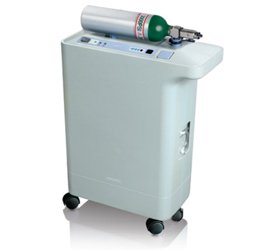
Self fill oxygen concentrator systems allow patients or caregivers to fill their own high-pressure cylinders from a concentrator. The ability to fill their own cylinders gives ambulatory patients greater independence and freedom from oxygen deliveries. Added safety benefits to these types of concentrators include electrical ground protection, fire protection and high/low pressure alarms that allow a patient to switch to a back up tank, if necessary. |
Portable Oxygen Concentrators
|
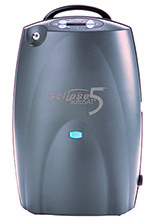
Portable oxygen concentrators are designed to accommodate ambulatory patients who require a lower dosage of oxygen. These units feature optional power sources that allow them to draw power from a wall outlet, a vehicle adapter or a battery pack. Portable oxygen concentrators are especially convenient for patients who like to travel and some of them are even approved by the FAA for use while traveling by air. |
Nebulizers and Medications
|
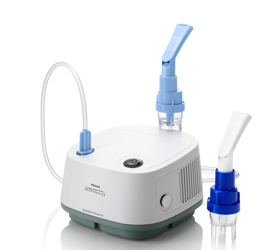
Nebulizers are devices that are used to administer medication in the form of a mist inhaled into the lungs. By using oxygen, compressed air or ultrasonic power, nebulizers deliver medical solutions which are broken up into small, inhalable aerosol droplets to a patient by way of the devices’ tubing and mouthpiece or nasal mask. Depending on your condition, your doctor may prescribe liquid medication to be used in conjunction with a nebulizer and compressor. Respira can order a nebulizer and any medication for you, upon receipt of a prescription from your doctor. |
Compressors
|
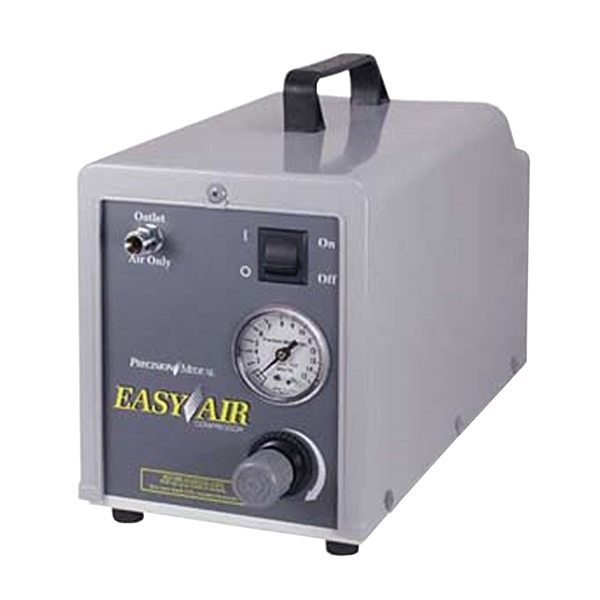
Medical compressors are devices used to pressurize room air, which can then be used to power other devices, such as respiratory equipment and accessories. Typically, medical air compressors come in two types: a tabletop unit that uses electricity from an outlet in your home and a portable unit that uses a battery, or may operate from the power outlet in a vehicle. |
Suction Machines
|
Suction machines are used to help clear secretions from the mouth or neck. Depending on the area, different catheters may be used: - Suction needed to clear oral (mouth) secretions require a Yankauer catheter; and - Suction needed to clear tracheal (neck) secretions requires an appropriate sized catheter that will be determined by your doctor. As a general guideline, suctioning should be kept to a minimum and the time per suction should also be limited to a few seconds, as the catheter removes not only secretions, but also air and oxygen. Finally, you should use as sterile a suctioning technique as possible. Infection caused by suctioning can be very serious and every possible precaution should be used to avoid contamination. If you notice a change in color or odor of secretions, notify the physician immediately. |
Pulse Oximetry and Nocturnal Pulse Oximetry
|
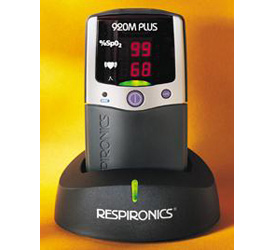
Nocturnal Pulse Oximetry is a test to monitor and record the level of oxygen in your blood as you sleep through the night at home.
With this test, an oxygen sensor is clipped to your finger and connected to a machine called an oximeter.
The oximeter measures and records your heart rate and the level of oxygen carried in your blood (your oxygen saturation or O2 sat). There are two common reasons that your doctor may recommend Nocturnal or Pulse Oximetry: - As part of an initial evaluation to screen for obstructive sleep apnea (OSA) and to determine the urgency for consultation. OSA is a condition in which you briefly stop or reduce your breathing while you sleep. When this happens, the level of oxygen in your blood may drop, which will be measured and recorded on the oximeter. For more information on this disorder, see the fact sheet on Obstructive Sleep Apnea (OSA). - To assess your need to start, continue, or increase home oxygen for various conditions. |

Shop now by clicking the link above or by calling us toll free at 1-866-373-7747
anytime, day or night (including weekends and holidays) and we’ll be happy to assist you with your order.

Questions?
Respira is here to support you and assist with any questions or concerns
you may have with our services and products. Please call us toll free at 1-866-373-7747 anytime, day or night, including holidays,
and we will be happy to help. Or you can email us at info@respirainc.com.